
Wood Blinds: How to Choose the Right Style for Your Home
Wood blinds bring a warmth and natural character to a room that few window treatments can match. They also give you precise control over light and privacy with a simple tilt of the slats.
Still, choosing the right set takes more than picking a pretty stain. Material, slat size, finish, and operating system all shape how your blinds look and perform. This guide walks you through each decision so you can shop with confidence.
Why Homeowners Love Wood Blinds
Few window coverings feel as inviting as wood blinds. Real wood has a depth and grain that synthetic materials struggle to copy. It pairs well with traditional, rustic, farmhouse, and modern interiors alike. That versatility is a big reason custom window blinds in natural wood remain a favorite in Chicago homes.
The benefits go beyond good looks. Tilting the slats lets you soften harsh sun, bounce light toward the ceiling, or close off the view entirely. Wood also adds a modest layer of insulation at the window. The U.S. Department of Energy notes that closed blinds on sunny windows can help limit heat gain during warmer months. That means a cooler, more comfortable room on those long July afternoons.

Real Wood vs. Faux Wood: Understanding Your Materials
Before you settle on a style, decide which material suits each room. Most real wood blinds use lightweight hardwoods like basswood, which stays stable and takes stain beautifully. Faux wood uses PVC or composite materials that mimic the look of natural grain.
Each option has its own strengths. Real wood is lighter, so large windows stay easy to raise and lower. It also offers richer color and more authentic texture. Faux wood resists warping and moisture, which makes it a practical fit for bathrooms and laundry rooms.
Many homeowners mix the two throughout the house. They choose real wood for living rooms, dining rooms, and bedrooms, then switch to faux wood in high-humidity areas. Matching colors between both materials keeps the look consistent from room to room.
Popular Styles and Slat Sizes for Wood Blinds
Slat width has a big effect on both style and function. Most wood blinds come in a few standard sizes, and each one creates a different feel:
1-inch slats: A slim, tailored look that suits smaller windows, French doors, and compact spaces.
2-inch slats: The classic choice for most homes, offering a balanced look on standard-sized windows.
2½-inch slats: Wider slats that open up the view and create a bolder, more contemporary statement.
Wider slats let in more light and view when open, since fewer slats cross the window. Narrower slats offer a finer, more detailed look that works well in smaller rooms. Your ceiling height, window size, and furniture scale can all guide the choice.
Customizing Your Wood Blinds to Match Your Space
Customization is where this window treatment truly shines. Finishes range from pale natural tones to warm honey, rich walnut, and deep espresso stains. Crisp painted whites and soft grays also work well in brighter, more modern spaces.
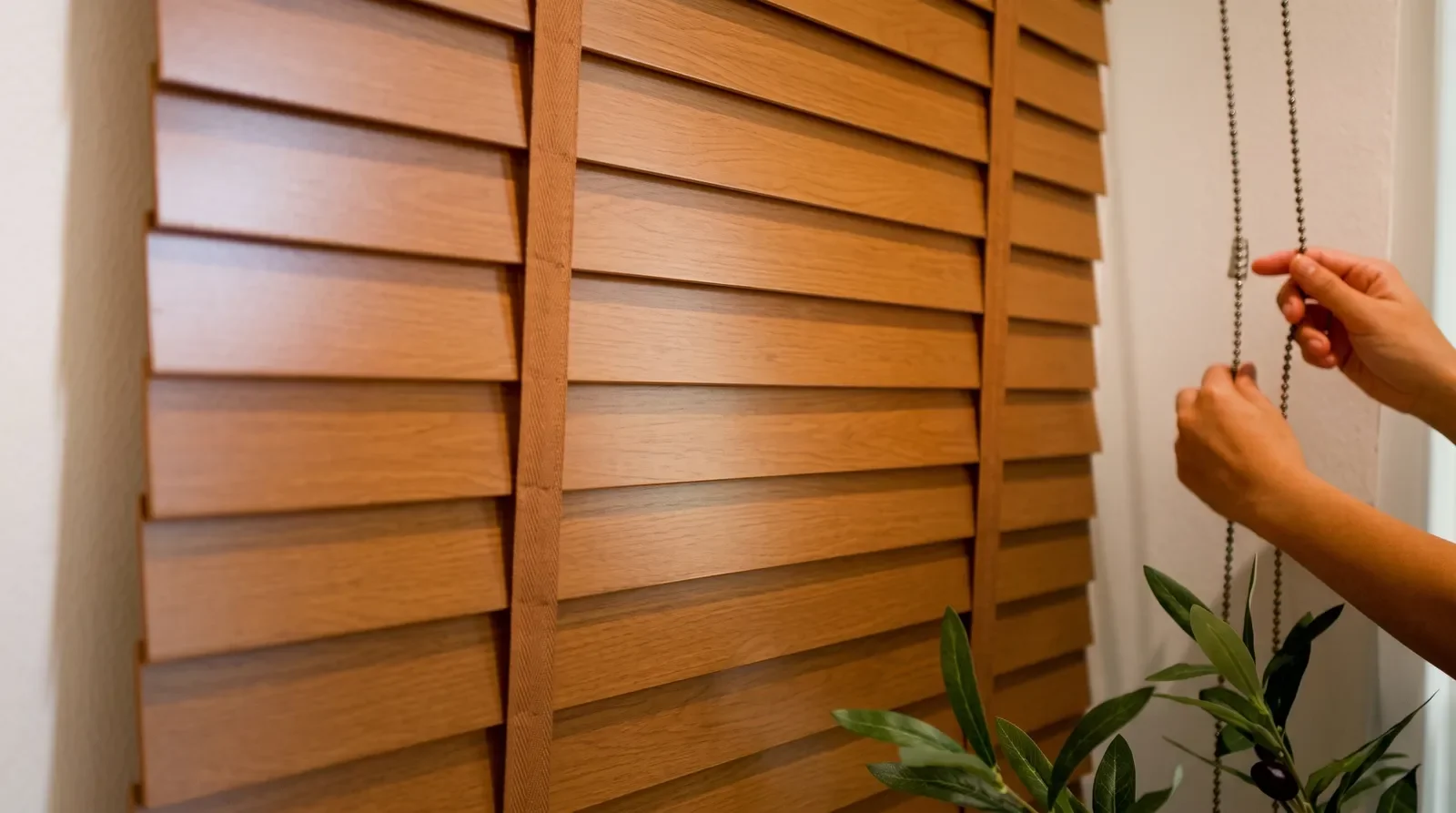
Decorative touches can add even more personality. Cloth tapes run down the front of the slats, cover the small route holes, and add a band of color or texture. A matching valance hides the headrail for a polished, finished look.
Operating systems matter just as much as appearance. Cordless lift systems create clean lines and help make homes safer for kids and pets. Some custom wood blinds also offer motorized options, which are handy for tall or hard-to-reach windows. With so many choices, every window can feel tailored to the way you live.
Key Considerations Before You Buy
Every room asks something different of its window coverings. Think about how you use each space before ordering wood blinds. Bedrooms often need stronger privacy and light control, while living rooms may favor soft, filtered light.
Humidity and sunlight deserve careful thought too. Real wood can warp near a steamy shower or stove, so faux wood is often the smarter pick there. Intense afternoon sun may also fade some finishes over time. If you love the warmth of wood but want a more permanent architectural feature, custom shutters are worth comparing as well.
Finally, look at your window depth and mounting style. An inside mount sits neatly within the frame for a clean, built-in look. An outside mount covers more of the wall, which blocks extra light and can make windows appear larger.
Why Professional Measuring and Installation Matter
Even beautiful wood blinds can disappoint if they don't fit correctly. A small measuring error can let light leak in around the edges or cause slats to rub against the frame. Older Chicago homes often have frames that aren't perfectly square, which makes accurate measuring even more important.
Installation matters just as much. Wood is heavier than aluminum, so brackets need careful placement and secure mounting. A trained installer makes sure your blinds hang level, tilt smoothly, and operate the way they should for years to come.
Get Expert Help Choosing Your Window Treatments
Choosing wood blinds feels much easier when someone walks you through the options in person. Windy City Blinds has helped homeowners and businesses across Chicagoland find the right window treatments for over 20 years. Our design consultants bring samples directly to your home. That way, you can see how each stain and slat size looks in your own light and alongside your own furniture.
From the first conversation to professional measuring and installation, our team handles every step with care. If you're curious how a warm walnut or crisp white finish would look in your living room, we'd be glad to show you. Set up a complimentary in-home consultation whenever it suits you, and let's find the blinds that feel just right for your home.